You Won’t Believe These Secret Photo Spots in Provence
Provence isn’t just lavender fields and sun-drenched villages—there’s a deeper magic hidden in its themed corners. I’ve wandered its trails, timed the golden light, and discovered spots where every frame feels like a postcard come to life. From dreamy hilltops to forgotten orchards, these are the places that make your camera work overtime. This is real beauty, untouched and unforgettable. For women who seek quiet inspiration, who travel not just to see but to feel, Provence offers a rare gift: the chance to capture moments that resonate long after the journey ends. It’s not about perfection—it’s about presence, perspective, and the simple joy of seeing the world through a lens that honors its soul.
The Heart of Lavender Country – Valensole Plateau
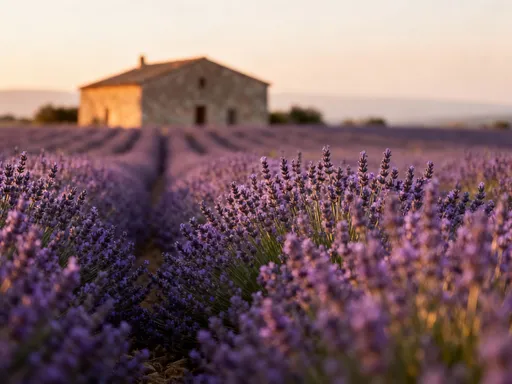
Stretching across the southeastern edge of the Alpes-de-Haute-Provence, the Valensole Plateau is widely recognized as the epicenter of lavender production in Europe. Covering over 200 square kilometers, this high-altitude expanse hosts the most extensive lavender fields on the continent, creating a sea of purple that rolls gently beneath the Provençal sky. The best time to photograph this natural spectacle is between late June and mid-July, when the *Lavandula angustifolia* variety reaches full bloom. During this window, the air hums with bees and carries the delicate, calming fragrance that has made lavender synonymous with wellness and tranquility.
To truly capture the essence of Valensole, timing is everything. Arrive before sunrise to witness the first golden rays spill across the dew-covered plants. The low angle of dawn light enhances texture and depth, casting soft shadows that define the furrows of the fields. Photographers often favor wide-angle lenses to emphasize the vastness of the landscape, using farm tracks or dry stone walls as leading lines into the composition. The contrast between the vibrant purple blooms and the pale limestone soil creates a natural palette that needs no enhancement in post-processing.
Crowds are inevitable during peak season, particularly near roadside viewpoints. To avoid them, explore lesser-known access roads between Valensole and Riez, where family-run farms allow quiet observation from designated paths. Respect private property by staying on marked trails and never stepping into the fields without permission. Some farms offer early access to photographers through pre-arranged visits—this not only ensures solitude but also supports local agriculture. Remember, the most powerful images often come from patience and respect, not proximity.
Timeless Beauty in Gordes – A Village Like No Other
Perched atop a rocky outcrop in the Luberon Mountains, the village of Gordes stands as one of France’s most photographed hilltop settlements. Built from local limestone that glows warm and golden in the afternoon sun, its terraced houses cling to the hillside like something from a Renaissance painting. The architecture reflects centuries of adaptation to the rugged terrain, with narrow alleyways, vaulted passages, and stone staircases that invite exploration. For photographers, Gordes offers a masterclass in light, texture, and composition.
The most iconic view of Gordes unfolds from the overlook near the Château de Gordes, now home to the Centre d’Art Contemporain. From this vantage point, the entire village cascades downward, framed by rolling hills and distant olive groves. Early morning light softens the stone, reducing harsh contrasts and revealing subtle tonal variations. By late afternoon, the warm hues intensify, turning walls into radiant canvases. This transformation occurs daily, making Gordes a compelling subject for time-lapse sequences or comparative studies of light over time.
For a more intimate perspective, walk the path behind the Église Sainte-Marie-Madeleine. Here, the village opens into agricultural terraces where wild herbs grow between ancient stone retaining walls. These areas are less frequented by tourists and offer opportunities for close-up shots of weathered textures, climbing vines, and seasonal flora like poppies in spring or golden thyme in summer. The contrast between cultivated order and natural overgrowth creates a visual narrative of harmony and resilience.
Seasonal shifts also influence the mood of your photographs. In spring, the surrounding countryside bursts with greenery, offering a lush counterpoint to the pale stone. By midsummer, drought conditions turn grasslands golden, enhancing the earthy palette. Autumn brings misty mornings and soft light, ideal for atmospheric shots. Regardless of season, Gordes rewards those who wander slowly, observing not just the grand vistas but the small details—a flower in a crack, a shutter left ajar, a cat sunning on a windowsill.
Roussillon’s Red Earth – Nature’s Palette on Display
Nestled in the heart of the Luberon Regional Natural Park, the village of Roussillon is famed for its striking geological feature: the Ochre Trail, or Sentier des Ocres. This walking path cuts through a former ochre quarry where centuries of mining have exposed layers of iron oxide-rich rock in vivid shades of red, orange, yellow, and rust. The colors are so intense they appear almost artificial, yet they are entirely natural, formed by the oxidation of minerals under Mediterranean sun and wind.
The trail itself is approximately 1.5 kilometers long and suitable for all fitness levels. Along the way, interpretive signs explain the history of ochre extraction, which once made Roussillon a key supplier of natural pigments for artists and textile makers across Europe. Today, the site serves as both a geological wonder and a photographer’s paradise. The interplay of light and shadow along the narrow canyon walls creates dramatic contrasts, especially when the sun is low. Morning light from the east illuminates the southern-facing cliffs, while late afternoon light bathes the northern side, offering two distinct shooting windows each day.
For optimal results, use a polarizing filter to reduce glare and enhance color saturation. A mid-range zoom lens (24–70mm) works well for capturing both wide landscapes and tighter compositions of striated rock faces. Close-up shots reveal intricate patterns formed by erosion—ripples, grooves, and fractures that resemble abstract art. Wide-angle lenses emphasize the scale of the formations, while telephoto settings compress perspective, isolating bands of color against the sky.
Interestingly, overcast days can produce superior images here. Without direct sunlight, the colors appear more uniform and less washed out, allowing the true richness of the pigments to shine. This makes the Ochre Trail a rare location where cloudy conditions are not a setback but an advantage. Additionally, fewer visitors come during overcast periods, giving photographers more space and time to compose their shots without distraction.
Sénanque Abbey – Where History Meets Harmony
Founded in 1148, the Abbey of Notre-Dame de Sénanque is a serene Cistercian monastery surrounded by one of the most iconic lavender fields in Provence. The austere Romanesque architecture—simple stone walls, rounded arches, and a modest bell tower—stands in quiet contrast to the vibrant purple blooms that stretch toward it each summer. This juxtaposition of human craftsmanship and natural beauty has made Sénanque a symbol of Provençal harmony.
Photographing the abbey requires careful planning, particularly during harvest season (late June to mid-July), when access to the surrounding fields is restricted to protect the crop. Visitors are asked to stay on designated pathways, which can limit compositional options. However, the enforced distance often results in more balanced images, framing the abbey as a focal point within the broader landscape rather than a detail lost in purple.
The best time to visit is early morning, when the air is still and often filled with a soft, silvery fog. This atmospheric condition adds depth and mystery to photographs, softening edges and creating layers of tone. As the sun rises, the fog lifts gradually, revealing the abbey in stages—a cinematic unfolding that rewards patient observation. A tripod is recommended for long exposures during these low-light conditions, especially if capturing the interplay between mist and emerging sunlight.
Compositionally, the abbey lends itself to symmetry and natural leading lines. The rows of lavender act as strong horizontal elements, guiding the eye toward the central structure. Including a portion of the stone wall that borders the field can add foreground interest and frame the scene. For a more contemplative mood, focus on reflections in rain puddles after a light shower—these fleeting mirrors capture inverted images of the abbey and sky, doubling the visual poetry.
Luberon’s Hidden Orchards – Off-the-Beaten-Path Charm
Beyond the famous villages and lavender fields lies a quieter Provence—one of forgotten orchards, crumbling farmsteads, and winding country lanes. Between Bonnieux and Lourmarin, the landscape opens into rolling hills dotted with abandoned stone houses, overgrown vineyards, and ancient fruit trees. These areas are rarely marked on tourist maps, yet they offer some of the most authentic and evocative photography opportunities in the region.
One such location is a disused apricot grove near the hamlet of La Coquillade. Here, gnarled trees rise from tangled grass, their branches twisted by time and weather. Stone walls, half-collapsed and draped in ivy, enclose the space like forgotten sentinels. In spring, wildflowers bloom between the roots—blue chicory, pink thistles, and yellow broom—adding splashes of color to the rustic scene. These natural elements combine to tell a story of resilience and quiet beauty, perfect for narrative-driven photography.
Accessing these sites requires discretion and respect. Many of the properties are privately owned, even if they appear abandoned. Always seek permission before entering enclosed areas, and never disturb existing structures or vegetation. In some cases, local farmers may grant access in exchange for a polite inquiry—this simple act of courtesy often opens doors that signs and fences would otherwise close.
For composition, use natural framing techniques: shoot through archways, window openings, or tree branches to create depth and focus. A slightly elevated position—such as a nearby hill or driveway—can provide a broader view of the orchard’s layout. The key is to capture not just the physical space, but the feeling it evokes: nostalgia, solitude, the passage of time. These emotional layers are what elevate a simple photograph into a lasting memory.
Aix-en-Provence Streets – Urban Elegance with Provençal Flair
While the countryside draws many with its pastoral charm, Aix-en-Provence offers a different kind of beauty—one rooted in urban grace and daily life. Known for its elegant 17th- and 18th-century architecture, tree-lined boulevards, and vibrant markets, Aix blends refinement with warmth. For photographers, the city presents endless opportunities to capture the rhythm of Provençal living, from morning errands to evening strolls.
Rue Cardinale, one of the city’s oldest streets, is lined with pastel-colored buildings, iron balconies, and flower boxes spilling with geraniums. The light here changes dramatically throughout the day—cool and crisp in the morning, golden and diffused in the late afternoon. The street’s slight curve creates natural perspective lines, drawing the eye toward distant doorways or fountains. Candid shots of locals walking dogs, carrying shopping bags, or pausing at café tables add human warmth to architectural compositions.
The Cours Mirabeau, Aix’s grand central avenue, is another essential subject. Flanked by plane trees and dotted with fountains, it serves as the city’s social heart. Early morning is ideal for photography, before traffic and crowds fill the space. Mist often lingers under the trees, softening the light and adding atmosphere. The central water feature, the Fontaine d’Eaux, reflects the surrounding buildings and foliage, offering mirror-like compositions.
Market scenes at Place des Prêcheurs and Place Richelme provide rich color and texture. Stalls overflow with ripe peaches, purple figs, wheels of cheese, and bundles of herbs. Photographers should approach with sensitivity, smiling and nodding to vendors before taking shots. The best images emerge from genuine interaction—capturing a vendor’s hands arranging fruit, or a child reaching for a sample. These small moments convey authenticity far more than posed scenes ever could.
Sunset Magic at Lourmarin & Beyond – Golden Hour Gems
As the sun begins its descent, central Provence transforms. The light softens, turning from bright white to warm amber, then deep rose. This golden hour—particularly the 30 minutes before and after sunset—imbues the landscape with a dreamlike quality. Among the most rewarding locations for twilight photography is the village of Lourmarin, where the silhouette of its 16th-century château stands against a gradient sky.
For an unobstructed western view, head to the agricultural plateau just outside the village. Here, vineyard rows stretch toward the horizon, their orderly patterns catching the last light in rhythmic waves. Use a tripod to stabilize your camera, especially as light levels drop. A narrow aperture (f/11 to f/16) ensures sharpness from foreground to background, while a slower shutter speed captures the subtle shifts in sky color. Experiment with white balance settings to preserve the warmth of the scene—auto settings may cool the tones too much.
Long-exposure techniques can elevate dusk photography. With shutter speeds of 10 to 30 seconds, moving elements like wind-blown grass or drifting clouds become soft streaks, adding motion and mood. Meanwhile, static elements—stone walls, distant trees, the château’s tower—remain crisp, creating a striking contrast between stillness and flow. These images often feel more meditative, inviting viewers to pause and breathe.
Patience is essential. The most breathtaking moments are fleeting—when a cloud catches fire, or a beam of light breaks through just as the sun disappears. Arrive at least 45 minutes before sunset to scout compositions and set up equipment. Stay beyond twilight to capture the blue hour, when the sky turns deep indigo and village lights begin to twinkle. These layered transitions are what make Provence’s evenings so unforgettable.
Conclusion: Why These Spots Stay With You
The secret photo spots of Provence are not just places to visit—they are experiences to live. Each location, from the vast lavender fields of Valensole to the quiet orchards near Lourmarin, offers more than visual beauty. They invite connection, reflection, and a deeper awareness of the present moment. For women who travel with intention, who seek meaning in every journey, these sites provide a rare opportunity to slow down and truly see.
Photography in Provence is not about chasing the perfect shot. It’s about honoring the landscape, respecting its rhythms, and capturing the quiet stories that unfold when you take the time to look. The best images are not those with the most color or clarity, but those that carry emotion—the soft light on an old wall, the curve of a vineyard row, the stillness of a morning mist.
As you plan your next trip, remember that the most memorable moments often come from the unplanned—a chance encounter, a hidden path, a moment of golden light. Carry your camera with care, but let your heart lead the way. In Provence, beauty is not hidden because it wants to be elusive—it’s waiting to be discovered by those who move gently, observe deeply, and listen to what the land has to say.